
Hex colors or a hex triplet is a six-digit, three-byte hexadecimal number used in HTML, CSS, SVG, and other computing applications to represent colors.
The bytes represent the red, green and blue components of the color. One byte represents a number in the range 00 to FF (in hexadecimal notation), or 0 to 255 in decimal notation. This represents the least (0) to the most (255) intensity of each of the color components. Web colors specify colors in the True Color (24-bit RGB) color scheme. The hex triplet is formed by concatenating three bytes in hexadecimal notation, in the following order:
- Byte 1: red value (color type red)
- Byte 2: green value (color type green)
- Byte 3: blue value (color type blue)
Hex colors are most often used in web development but how do you know what your color’s hex value is? There are over 16 million possible colors. Try our color picker below to find your favorite hex code.
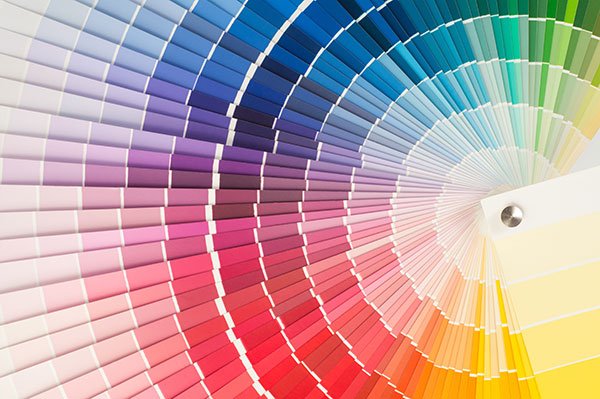
Try Our Color Picker
Click the colored rectangle below to begin.
Selected Color: #000000
Click any color to copy its HEX code.
We’ve also found a few nice hex color pickers that are right online at:
https://www.hexcolortool.com/, https://www.w3schools.com/colors/colors_picker.asp, or https://htmlcolorcodes.com/
Understanding Hexadecimal Color Codes: A Practical Guide
Whether you’re designing a website, creating a brand identity, or customizing a WordPress theme, understanding hexadecimal color codes gives you greater control over how your website looks and feels.
A hexadecimal color code, commonly called a hex code, is a standardized way of representing a color using combinations of numbers and letters. These codes make it possible to reproduce the same color consistently across different elements of your website.
From backgrounds and headings to buttons, borders, and navigation menus, hex codes are one of the simplest ways to establish a cohesive visual identity.
How Do Hex Color Codes Work?
The traditional six-digit hex color code begins with a hash symbol (#) followed by six characters.
For example: #336699
The six characters are divided into three pairs:
-
33 represents the amount of red.
-
66 represents the amount of green.
-
99 represents the amount of blue.
Each pair uses hexadecimal notation, a base-16 numbering system consisting of the digits 0–9 and letters A–F.
The lowest value, 00, represents no intensity of that particular color component. The highest value, FF, represents its maximum intensity.
By combining different red, green, and blue intensities, a six-digit hex code can represent 16,777,216 distinct colors.
Common Hex Color Codes and Their Meanings
Here are some useful examples:
| Color | Hex Code | RGB Values |
|---|---|---|
| Black | #000000 | 0, 0, 0 |
| White | #FFFFFF | 255, 255, 255 |
| Red | #FF0000 | 255, 0, 0 |
| Green (lime) | #00FF00 | 0, 255, 0 |
| Blue | #0000FF | 0, 0, 255 |
| Yellow | #FFFF00 | 255, 255, 0 |
| Cyan | #00FFFF | 0, 255, 255 |
| Magenta | #FF00FF | 255, 0, 255 |
| Orange | #FF6600 | 255, 102, 0 |
| Navy Blue | #003366 | 0, 51, 102 |
These represent exact digital colors, not necessarily the colors you would obtain by mixing physical paints or printing inks.
Can Hex Color Codes Be Shortened?
Yes! CSS supports shorthand hexadecimal notation when the red, green, and blue components each consist of two identical digits.
For example:
-
#FFFFFF becomes #FFF.
-
#000000 becomes #000.
-
#FF0000 becomes #F00.
-
#336699 becomes #369.
Both versions produce exactly the same color.
However, not every six-digit hex code can be shortened. A value such as #345678 must retain its full six-digit notation.
What Are Eight-Digit Hex Codes?
Traditional six-digit hex codes represent opaque colors. Modern CSS also supports eight-digit hexadecimal codes that specify transparency.
The format is #RRGGBBAA, where the final two digits represent the alpha channel.
For example:
-
#336699FF — completely opaque blue.
-
#33669980 — approximately 50% opaque blue.
-
#33669900 — completely transparent blue.
Transparency is particularly useful for overlays, backgrounds, interface elements, and visual effects.
An important distinction: transparency is not the same as brightness. A semi-transparent dark blue placed over a white background will appear lighter because the underlying white shows through.
Hex Colors vs. RGB vs. HSL: What’s the Difference?
Web developers have several ways to specify colors in CSS.
Hexadecimal: Uses red, green, and blue values expressed in hexadecimal notation, such as #336699.
RGB: Defines those same components using numerical values, such as rgb(51 102 153).
HSL: Defines colors through hue, saturation, and lightness. This approach can be convenient when experimenting with related colors or adjusting how vivid a color appears.
Hex and RGB are especially useful when exact colors have already been selected. HSL can be easier to understand when creating variations.
There isn’t one color format that’s universally best. The right choice depends on the design and the adjustments you need to make.
How to Choose a Website Color Palette
Selecting individual colors is easy. Creating a color palette that works harmoniously throughout an entire website takes more thought.
Begin with a primary brand color. This should reflect the personality and intended impression of your business.
Next, choose supporting colors for backgrounds, typography, borders, and interface elements.
Finally, select an accent color for important actions such as contact buttons, special offers, and highlighted information.
A practical starting point is:
-
Primary color: Used for important brand elements, major headings, or navigation.
-
Secondary color: Supports the primary color without competing for attention.
-
Accent color: Draws attention to important actions or information.
-
Neutral colors: Provide comfortable backgrounds, readable text, and visual breathing room.
You don’t need dozens of unrelated colors to create an engaging design. Consistent application and thoughtful contrast can make a small palette feel polished and sophisticated.
Why Color Contrast Matters for Website Accessibility
Color selection isn’t only about appearance. It also influences how easily visitors can read and interact with your website.
For example, light-gray text on a white background may look elegant, but it can be difficult to read, especially for people with visual impairments or when viewing a screen in bright sunlight.
The Web Content Accessibility Guidelines (WCAG) provide contrast recommendations to help designers create more accessible interfaces.
For WCAG AA, ordinary text generally needs a contrast ratio of at least 4.5:1, while large text generally needs at least 3:1. Many meaningful interface components and graphical elements also have a 3:1 non-text contrast requirement.
Remember that two attractive colors don’t necessarily provide sufficient contrast when placed together.
Always test your intended text and background combinations before publishing.
Also, avoid relying on color alone to communicate meaning. An error message should include an understandable explanation or symbol, rather than depending exclusively on red text.
How to Use Hex Codes in WordPress and Elementor
If you’re working with WordPress and Elementor, hex color codes are especially useful for maintaining a consistent design.
You can enter hex values in Elementor’s color controls when styling headings, text, buttons, backgrounds, borders, and many other elements.
For a more consistent website, consider defining your main brand colors using Elementor’s global color settings. This makes it easier to reuse the same values across multiple pages.
Instead of guessing which shade of blue was used on an earlier page, you can select the established global color.
For custom development, CSS provides another option: reusable custom properties, commonly called CSS variables.
Using variables makes it possible to update colors across a website without manually editing every CSS rule where a color appears.
/* Create a reusable website color palette */
:root {
    --primary-color: #336699;
    --secondary-color: #003366;
    --accent-color: #FF6600;
    --background-color: #FFFFFF;
    --text-color: #222222;
}

/* Apply your colors to website elements */
body {
    background-color: var(--background-color);
    color: var(--text-color);
}

h1, h2, h3 {
    color: var(--primary-color);
}

.example-button {
    background-color: var(--secondary-color);
    color: #FFFFFF;
    padding: 12px 24px;
    border-radius: 6px;
}

.example-button:hover {
    background-color: var(--primary-color);
}

.example-button:focus-visible {
    outline: 3px solid var(--accent-color);
    outline-offset: 3px;
}

/* Create a reusable website color palette */
:root {
    --primary-color: #336699;
    --secondary-color: #003366;
    --accent-color: #FF6600;
    --background-color: #FFFFFF;
    --text-color: #222222;
}

/* Apply your colors to website elements */
body {
    background-color: var(--background-color);
    color: var(--text-color);
}

h1, h2, h3 {
    color: var(--primary-color);
}

.example-button {
    background-color: var(--secondary-color);
    color: #FFFFFF;
    padding: 12px 24px;
    border-radius: 6px;
}

.example-button:hover {
    background-color: var(--primary-color);
}

.example-button:focus-visible {
    outline: 3px solid var(--accent-color);
    outline-offset: 3px;
}
Common Hex Color Mistakes to Avoid
Even experienced designers occasionally encounter problems when working with color codes.
Forgetting the hash symbol: When entering a hex value into CSS, remember to include the # symbol.
Confusing RGB with hex: Although the values represent the same color components, hexadecimal and decimal numbers use different notation.
Using insufficient contrast: Always check that important text, buttons, and interface elements remain readable.
Using too many unrelated colors: A large collection of colors without a clear visual system can create inconsistency and distract visitors.
Ignoring transparency: Semi-transparent colors can look very different depending on the background beneath them.
Forgetting hover and focus states: Buttons and links need visual feedback when people interact with them using a mouse or keyboard.
Not testing on multiple displays: Colors can appear different depending on screen calibration, brightness, display technology, and surrounding lighting conditions.
Frequently Asked Questions About Hex Colors
How many colors can a six-digit hex code represent?
A traditional six-digit hex code can represent 16,777,216 possible RGB combinations, because each of the three color components can contain 256 different values.
Are hex color codes case-sensitive?
No. Uppercase and lowercase hexadecimal letters represent the same values. For example, #FF6600 and #ff6600 produce the same color.
Can I convert a hex code into RGB?
Yes. Each pair of hexadecimal digits corresponds to one decimal RGB component. For example, #FF6600 becomes rgb(255 102 0).
Can I use hex colors in HTML?
Yes, usually through CSS applied to HTML elements. Hex codes are also used in SVG and many web development tools.
What is the difference between hex and Pantone colors?
Hex codes describe digital RGB colors, while Pantone provides standardized color references commonly used in physical printing and manufacturing. A hex color may be converted to an approximate print equivalent, but an exact visual match isn’t guaranteed.
Why does my hex color look different on another screen?
Differences in screen calibration, brightness, color profiles, display technologies, and ambient lighting can change how a color appears.
Using a consistent color standard helps, but it cannot guarantee identical appearance across every device.
Should I choose website colors based on psychology?
Color associations can influence perception, but they vary across cultures, industries, and individuals. Rather than assuming a particular color automatically increases sales, consider your audience, brand personality, readability, and actual user behavior.
Testing different design approaches is more useful than relying on universal claims about color psychology.
Final Thoughts: Build a Palette With Purpose
Hexadecimal color codes are more than technical values. They’re tools for creating consistency, visual hierarchy, and a recognizable brand identity.
Whether you’re selecting a background color, designing a call-to-action button, or building an entire website, understanding how colors work helps you make more intentional design decisions.
Experiment with the color picker above, save the codes you like, and test how your chosen colors work together.
The best website color palette isn’t necessarily the most colorful one. It’s the one that supports your message, improves usability, and helps visitors understand what matters most.